Virtual credit cards for ad spend: how they work and when to use them
A plain explanation of virtual cards for ad accounts: what they fix, where they fall short, and how teams set them up without a headache.
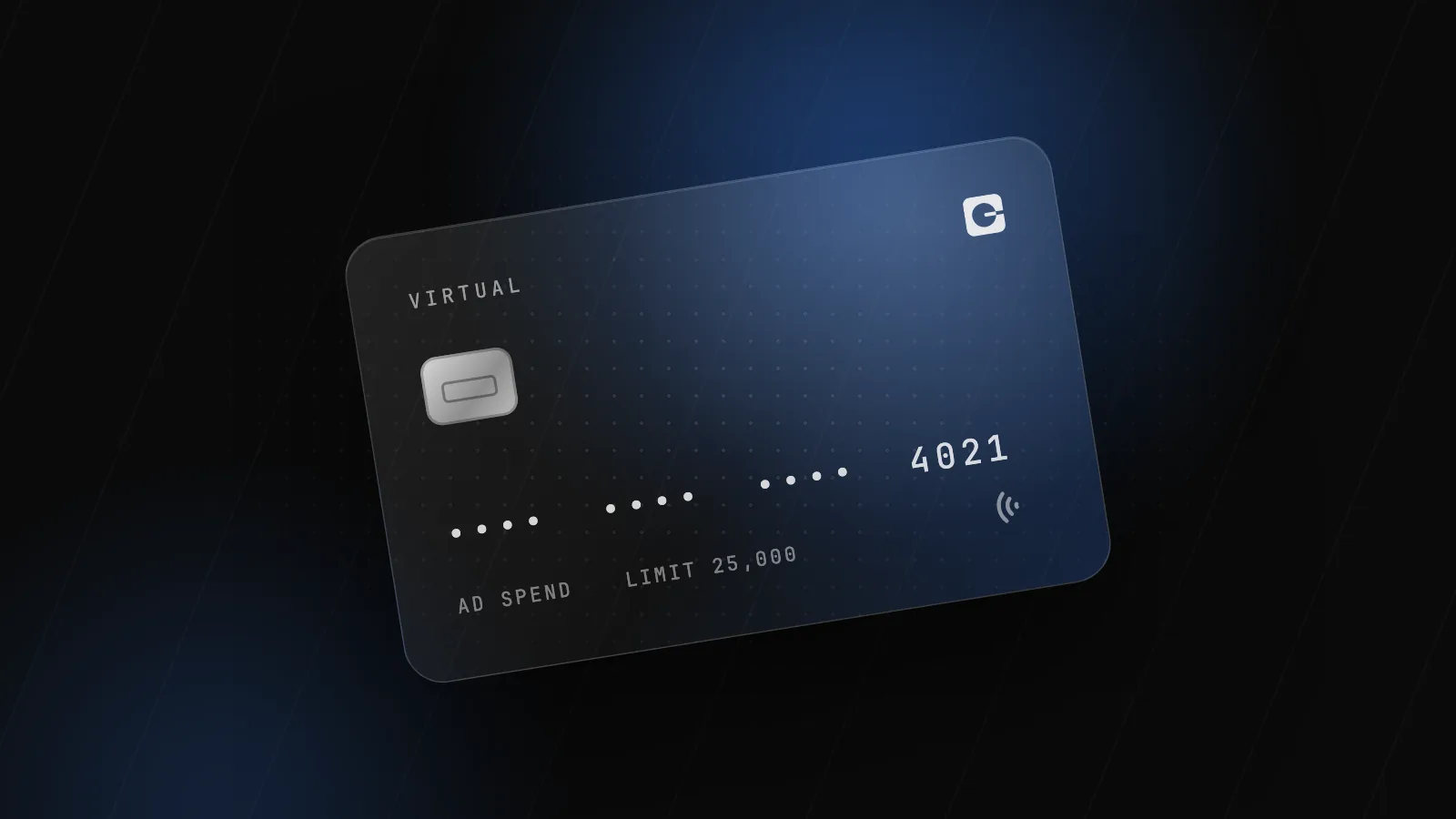
A virtual credit card is a card number without the plastic. It draws on a credit line, works anywhere a card works, and you can create as many as you need, each with its own limit, name and expiry date. For ad spend, that last part is the whole point.
Why ad spend is different
Ad platforms do not send an invoice and wait. They charge the card on file when spend crosses a threshold, or on a billing date, and they do it for every account you run. A team with eight clients across three platforms is looking at dozens of charges a month, most of them for odd amounts, all landing on whatever card was saved first. That is fine for one account. It gets ugly at ten.
What a virtual card changes
Issue one card per ad account and the charges sort themselves. Each statement line already says which client and which platform it belongs to, because the card is named that way. Each card carries the limit that was approved for that account, so it cannot quietly spend past it. If a platform account is ever compromised, you freeze that one card and every other account keeps running.
Virtual cards also fix the awkward moment when a card expires or gets replaced. Instead of re-entering a new number in twenty ad accounts, you replace the one card that changed.
Where they fall short
A virtual card is still a card. If the credit line behind it is small, you will hit the ceiling on a good month. A card designed for office supplies will also get flagged by its issuer when it starts paying Meta three times a day. Look for a provider that expects ad platform charges and sizes limits to media budgets rather than to expense reports.
A simple way to set them up
Start with one card per client per platform and name it exactly that. Set the limit to the approved monthly budget plus a small margin for the platform's own overspend. Turn on alerts well before the limit. Freeze cards when the work ends. The setup takes an afternoon and removes most of the payment surprises a media team deals with.